


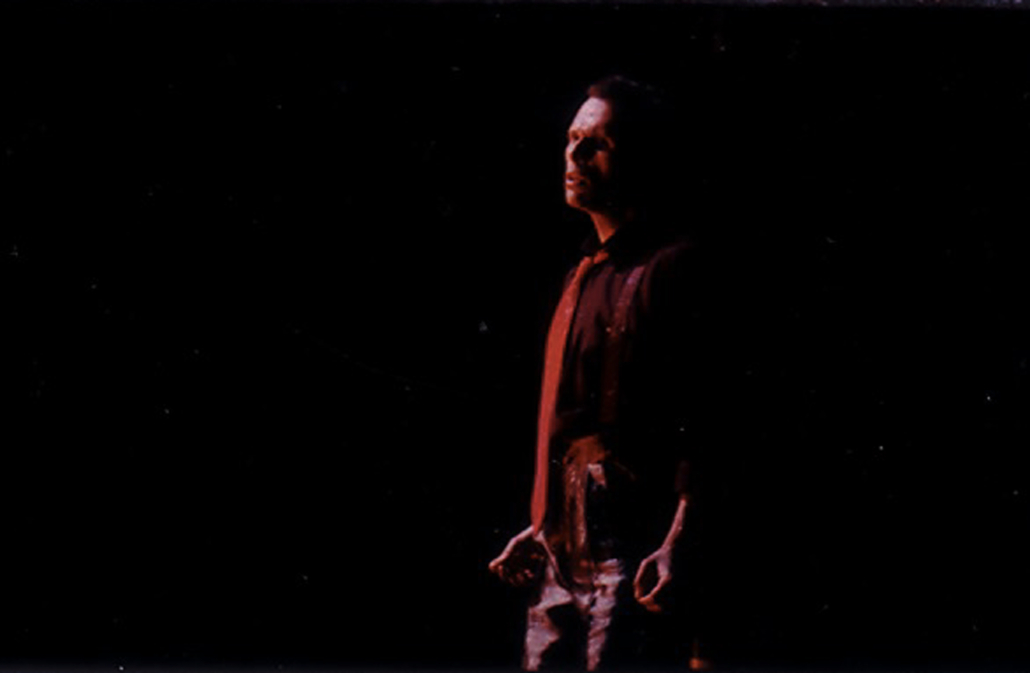

Photos Guy Vivien
Qui est fou ?
Premiered in January 2002 at the Moulin du Roc, Niort, and at the Grand Théâtre de Reims
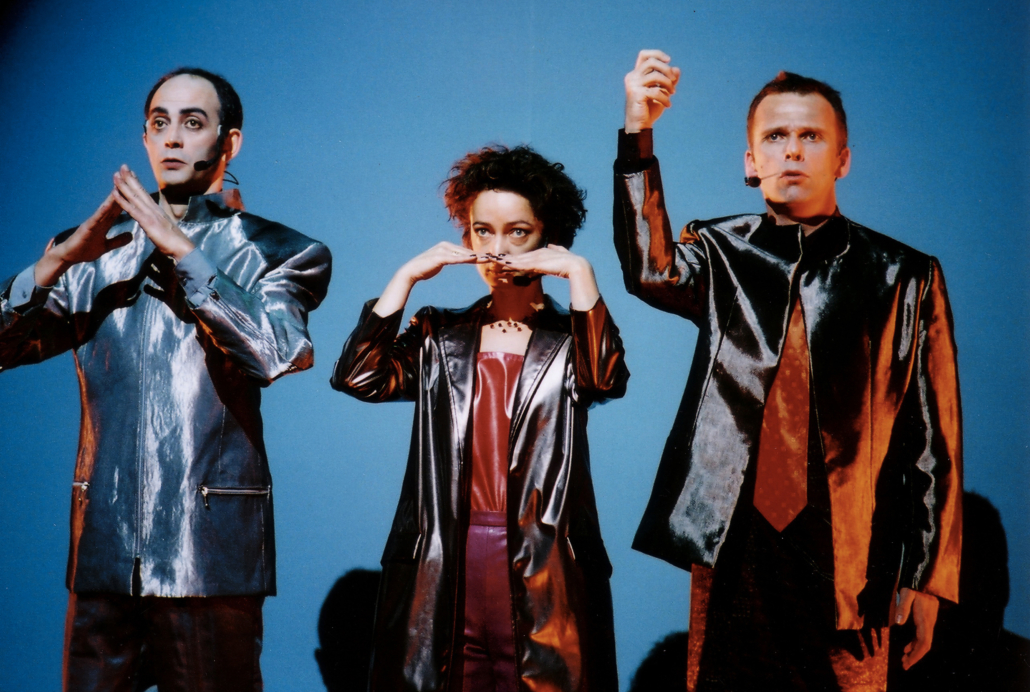
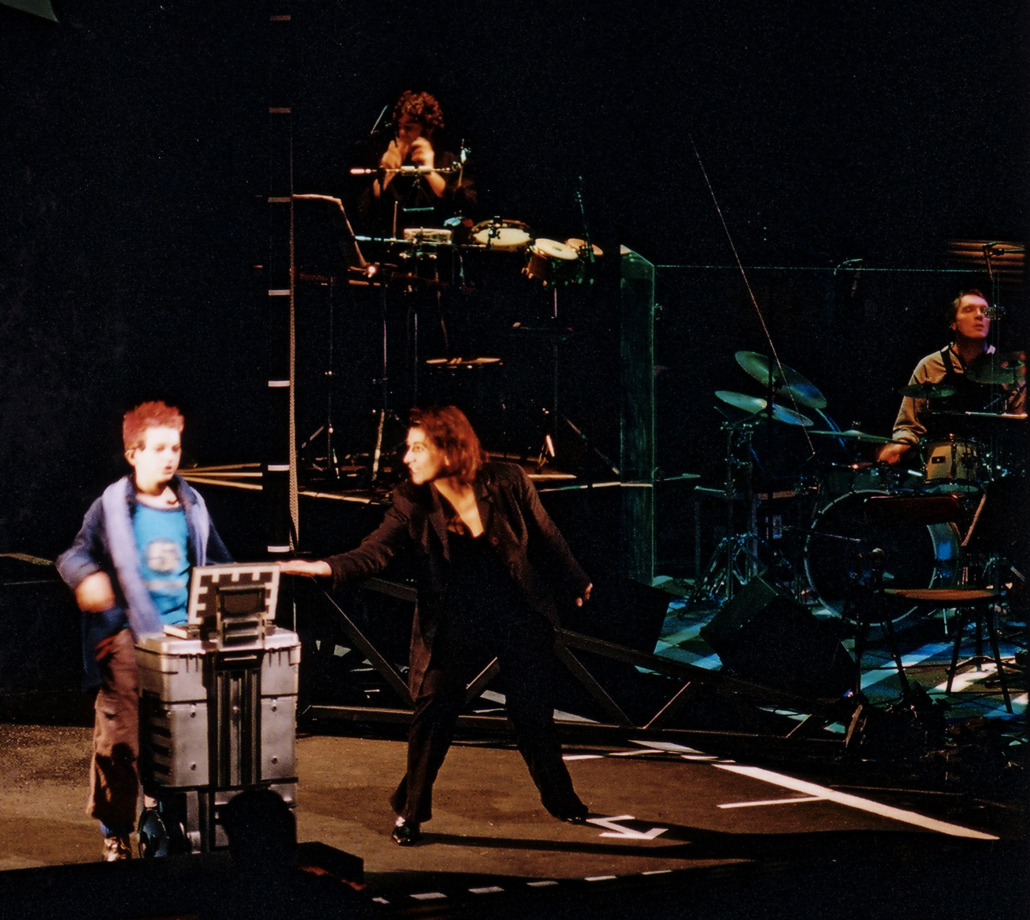
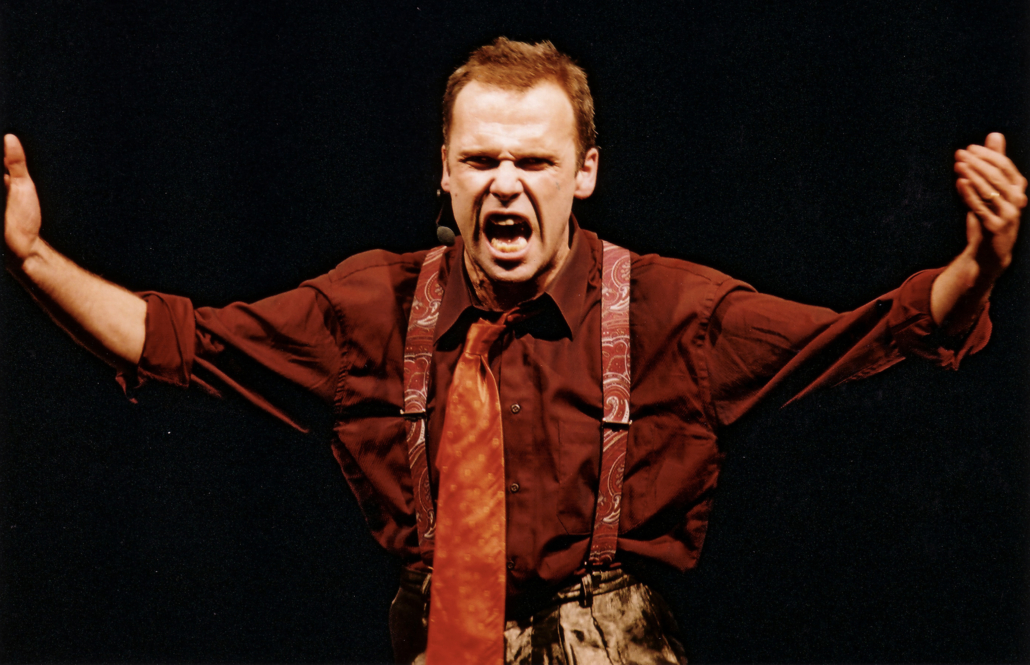
For six voices, ten musicians, two acrobats and a Video Jockey
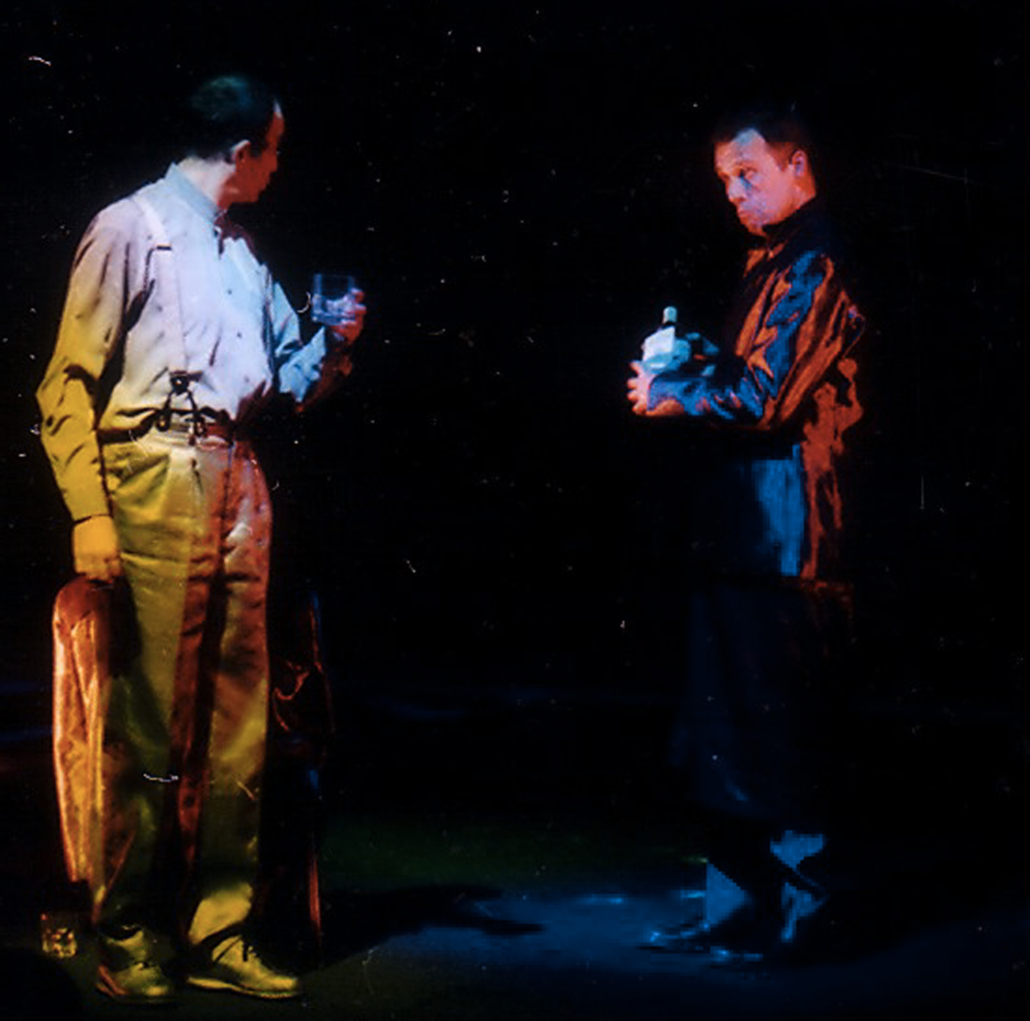
A man is murdered. He headed a multinational corporation and was opposing a hostile takeover bid by a rival company. A judge investigates the killing. She interviews witnesses, confronts them, examines the crime scene and searches for motives. Her investigation leads her into the heart of the business world. Twelve scenes and an interlude alternate between testimonies, confessions, cover-ups and accusations. Each of them, in turn, sketches a portrait of the victim and offer their own versions of the murder. Who are the characters in these twelve scenes? The victim’s associates, his rivals, his best friend… and some unsavory characters: two hired thugs – the prime suspects. Little by little, the judge comes to suspect a conspiracy. And indeed, in the final scene—following a series of corroborating clues—she unmasks the culprits.
Presse
Le Monde, 31 January 2002
The “songspiel” of Ribac and Schwabe
Squabbles and betrayals within a multinational corporation. The body of executive Chris Danford rises from the muddy waters. Suicide or murder? An investigating judge is questioning individuals who might have had an interest in this disappearance, one woman and two men. Thanks to a young genius skilled at deciphering computer memory, a semblance of an explanation comes to light. So much for the plot of Qui Est Fou? by the Ribac-Schwabe Company, a pop opera directed by François Abou Salem for six voices, ten musicians (the excellent Herméneutique Orchestra), two acrobats and a VJ (the video equivalent of a techno DJ).
Created and co-produced by the Moulin du Roc – Niort’s Scène nationale – and the Opéra-Grand Théâtre de Reims – an institution deserving immediate praise for this initiative—Qui est fou ? which premiered in mid-January, evokes the Songspiel form pioneered by Bertolt Brecht and Kurt Weill. Like them, composer-bassist François Ribac and singer-actress Eva Schwabe are interested in the facts of our present time. Far from the simplistic, black-and-white morality of Starmania, the villains in Qui Est Fou ? are not only ‘very’ bad, the victim or the judge are not only pure souls. It is up to the spectator to exercise their capacity for judgement by listening to the songs and certain elements of the staging. Ribac has composed an inventive and fluid score that moves back and forth between jazz, pop, song, and the relationship between acoustic and electric sounds, always with an eye to the melodic clarity magnified by certain experimentalists of the 1960s and 1970s (Carnaby Street schools, Soft Machine/Caravan, American psychedelia, the German scene, etc.) a sound currently being rediscovered by contemporary acts like The High Llamas. The libretto features texts primarily by Marie-Claire Pasquier, Hervé Le Tellier, Ribac and Schwabe, with borrowings from Rainer Maria Rilke or William Blake.
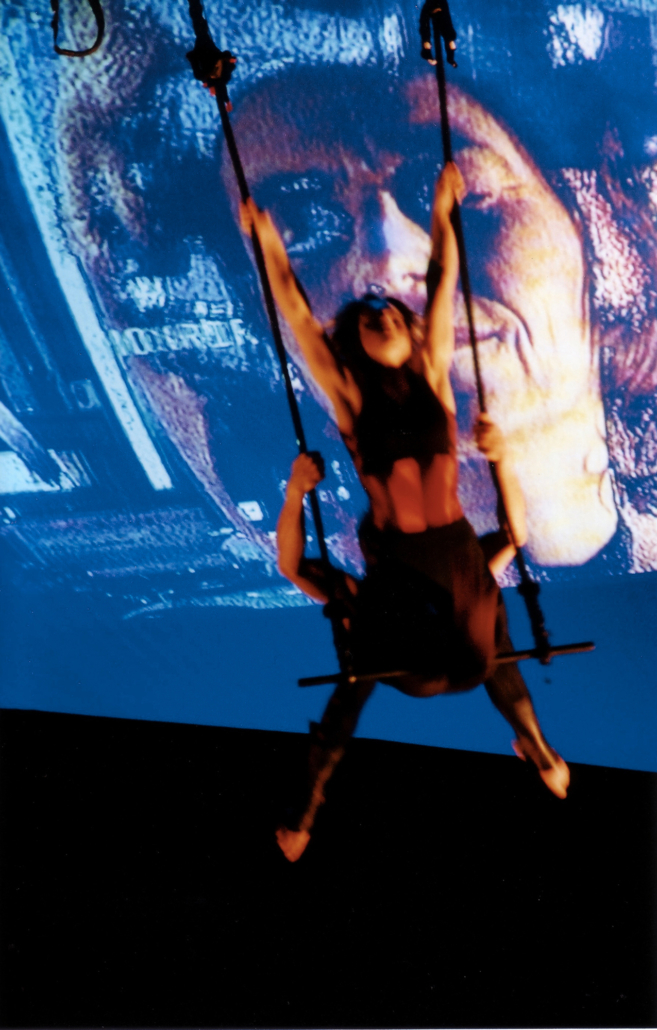
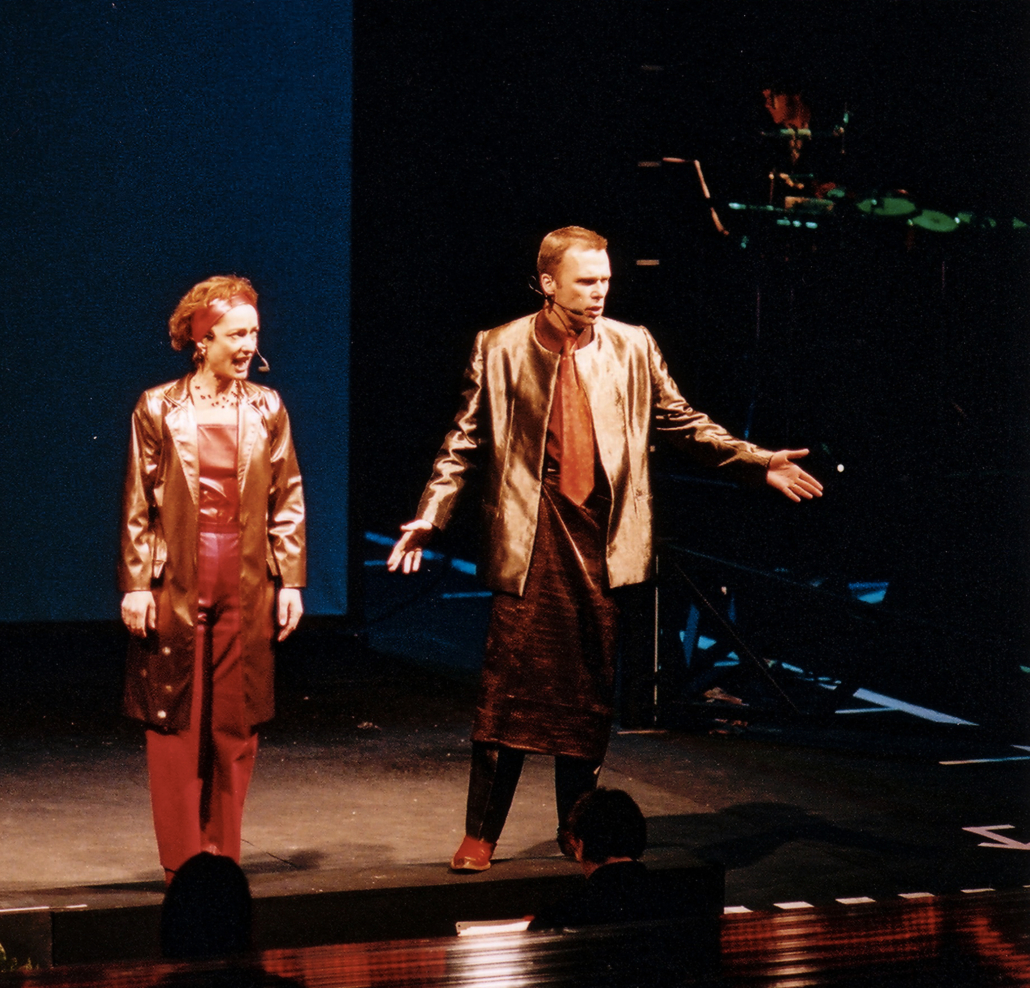
Words in French, English and German that fit exactly with the diversity of the timbres and the flow of the voices. Eva Schwabe (the judge) comes from a lyrical and cabaret background. Her description, in German, of the corpse is a moment of pure horrific grace. Marie-Jeanne Iché (the president of a rival company) starts from jazz and rock improvisation and tends towards the lyrical. A double highlight during a lift by the acrobats or the confrontation with the judge. Cathal Coughlan (rock star, friend or foe to Danford) exudes that haunted power typical of British artists on the fringes. François Gauthier (manipulator or manipulated), bass-baritone, comes from the opera. As for Jamil Gaspar, 11 years old, his sense of placement is a lesson for the “Star Academy”.
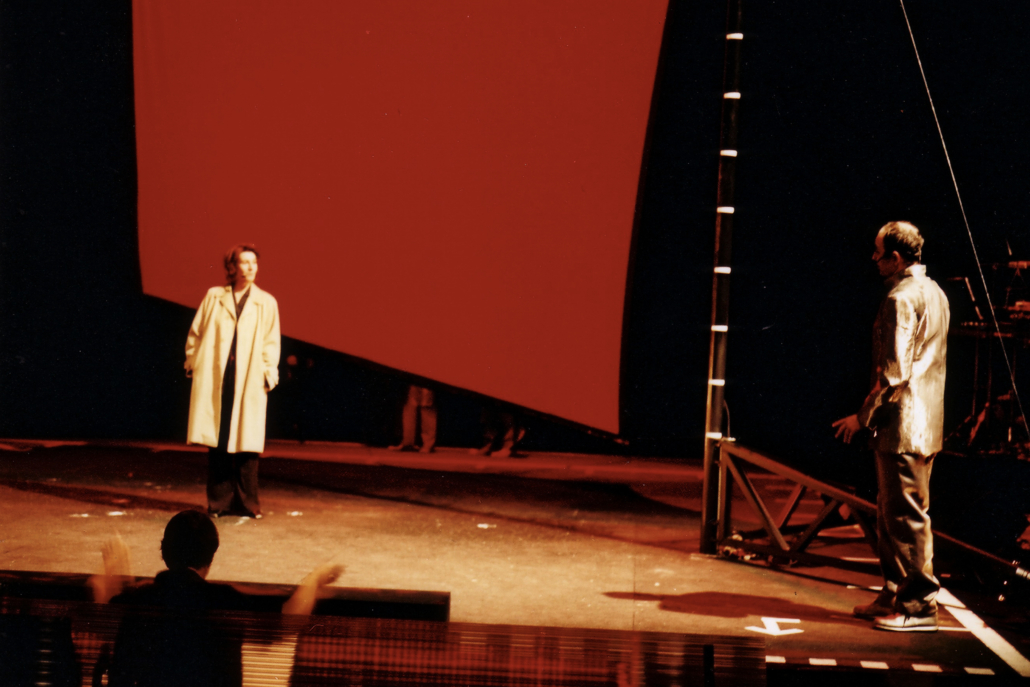
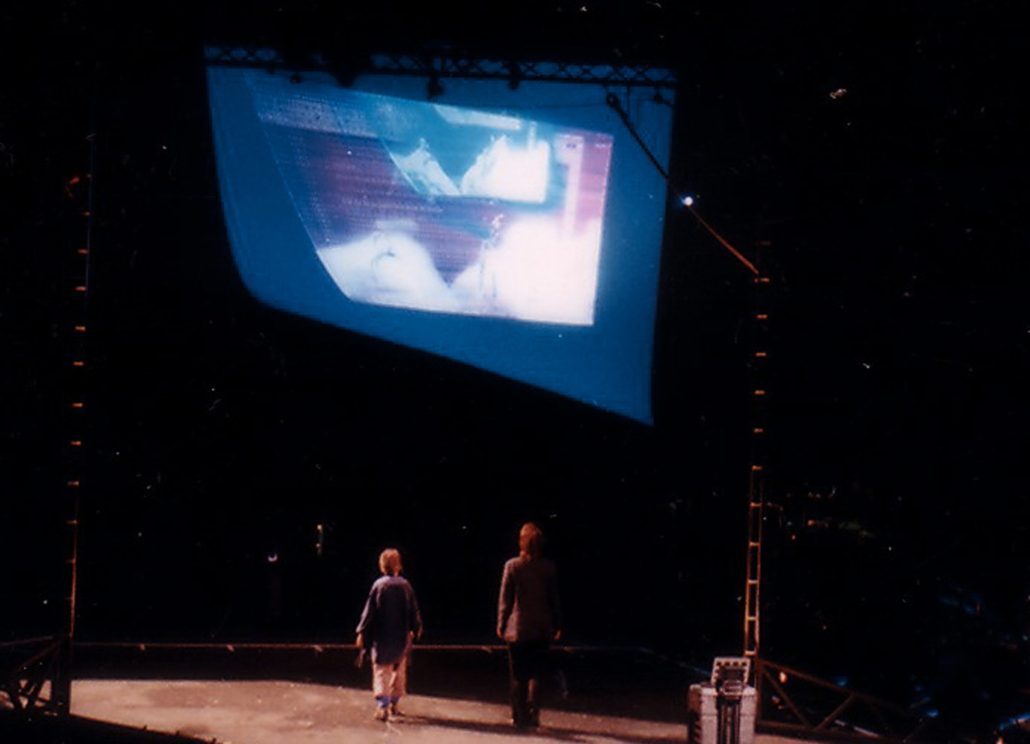
François Abou Salem’s minimalist staging manages the characters’ movements as if they were playing chess. It lacks a bit of legibility, especially for the two acrobatic hitmen, whose beautiful movements are mostly decorative. Text, photographs, and film clips are projected onto a large screen; this is where the dead man, played by Martin Newell, appears. A special treat in Qui est fou ? is the presence of Newell, a close associate of Andy Partridge and Colin Moulding—the pop duo XTC. Though physically absent, he is strikingly present thanks to Ribac’s creative vision.
Sylvain Siclier
Les INROCKUPTIBLES
week of 15 to 22 January
Contemporary composer François Ribac revives the spirit of cabaret—so dear to Weill and Brecht—with a dash of pop music thrown in.
WILDEST DREAMS
Qui est Fou? – A pop opera by the Ribac Schwabe Company
A fan of Martin Newell, the great alchemist of subtle English pop, François Ribac is now making his dream come true with Qui est fou ? his latest show, in which the pop singer brilliantly plays a captivating “voice-over”. It was not a foregone conclusion that he would reconcile his love for the American minimalism of Philip Glass and Steve Reich – reflected in his previous chamber operas Marguerite Ida and Helena Annabel, Un Demi-Siècle and Le Regard de Lyncée – with that of an English pop music chiseled to the extreme, between XTC and the Highs Llamas. With a background in jazz and electro-acoustic music, and now working as a composer and bassist, Ribac decided this time to entrust his music not to a single electronic keyboard, but to a ten-piece ensemble: the high-energy Herméneutique Orchestra. Tasked with providing solid backing for five vocalists—including actress Eva Schwabe, Ribac’s partner (and star of their earlier works Marguerite Ida et Helena Annabel and Un Demi-Siècle), and the Irishman Cathal Coughlan (a pop heavyweight alongside Newell and the charismatic, rich-voiced frontman of the defunct band Microdisney)—this innovative group drives its well-oiled machinery with relentless determination. “In reality, I wanted to write a musical, a show made up of songs,” explains Ribac, “I wanted to bring together the English pop tradition and the concept of the ‘musical miniature,’ in the spirit of the melodies composed by Brecht and Weill. I also wanted the storytelling to be told through the body as well, that’s why director François Abou Salem has incorporated two acrobats into the staging.”
François Abou Salem, director of Qui est Fou ? is known for the fantasy and overflowing imagination of his shows, and here he met a musician who combines vocal art with image. “It is a language fundamental to the generations born around the 1950s and 60s,” the musician adds. “I love the spirit of American performance art, where music serves as one of the artist’s vehicles for reflection. For example, when time slows down, when the gesture on stage becomes scarce, then the attention is entirely focused on the music – which is particularly noticeable with Meredith Monk, Robert Ashley or Laurie Anderson. For Qui est fou? Eva Schwabe and I devised a series of stories that shape the overall direction of the piece: the number of singers and actors, the prominence of specific roles, the use of video, and so on.”
In Qui est fou?, François Ribac blends the spirit of cabaret with that of pop music. He electrifies the traditional formation of this type of music that appeared in the 1920s, amplifying the strings and winds, reinforcing the percussion, all propelled by the electric guitar and bass; the voice comes out regenerated, washed of the cumbersome vibrato and of all affect, lyrical and pure.
Franck Mallet
On tour in Reims (Opéra) on 18 January, in Blanc-Mesnil (Forum Culturel), on 1 February in Arlon (Maison de la Culture), Belgium, on 14 February: and in Esh sur Alzette (Théâtre) Luxembourg on 16 February.
Latest news
 16th march 2026 – Some news16 March 2026 - 10h00
 François Ribac 16-03-1961 – 06-11-202415 November 2024 - 11h38
- Qui est fou?3 November 2024 - 16h32

