


Photos Nicolas Joubard
Just before (Ribac/Schwabe)
Singer: Cathal Coughlan
To the fade (Ribac/Newell/Schwabe)
Singers: Eva Schwabe, Marie Faye, Cathal Coughlan, François Ribac
Listen to other tracks on the album Into the Green (Musea/Gazul 2017) or on bandcamp
La Noce des Platines
Premiered in December 2007 at Espace 1789 in Saint-Ouen
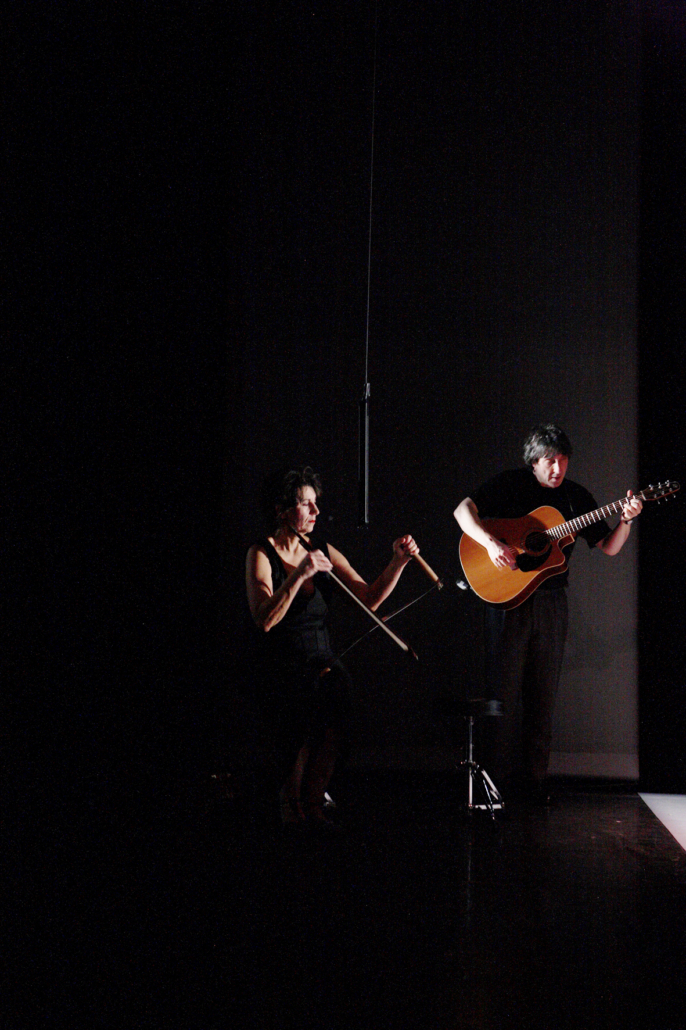
A (pop) opera for four singers-musicians
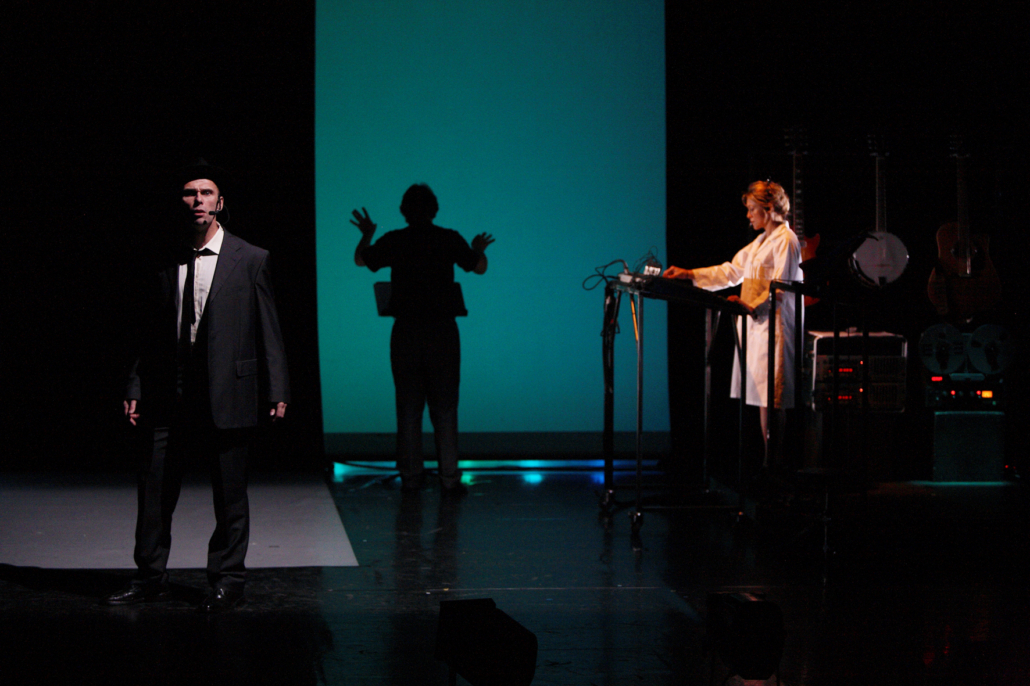
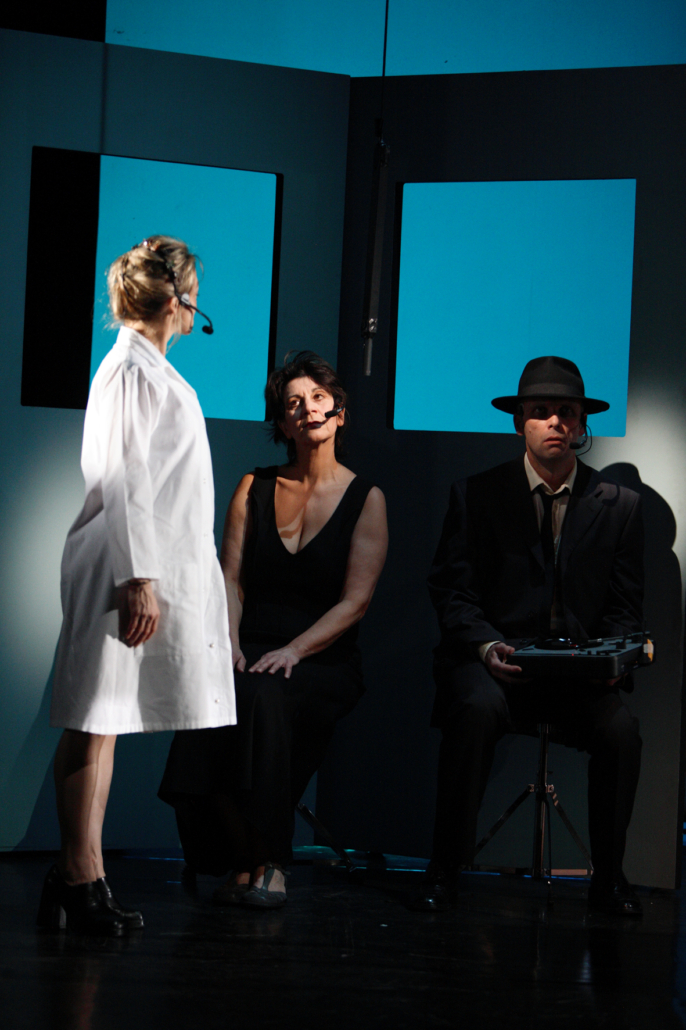
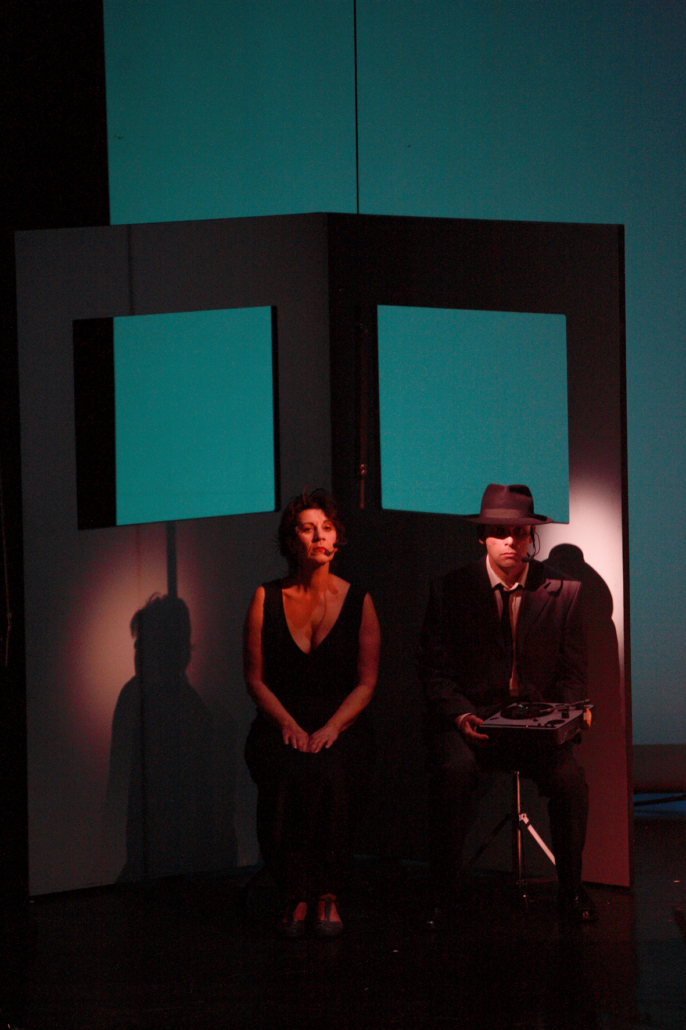
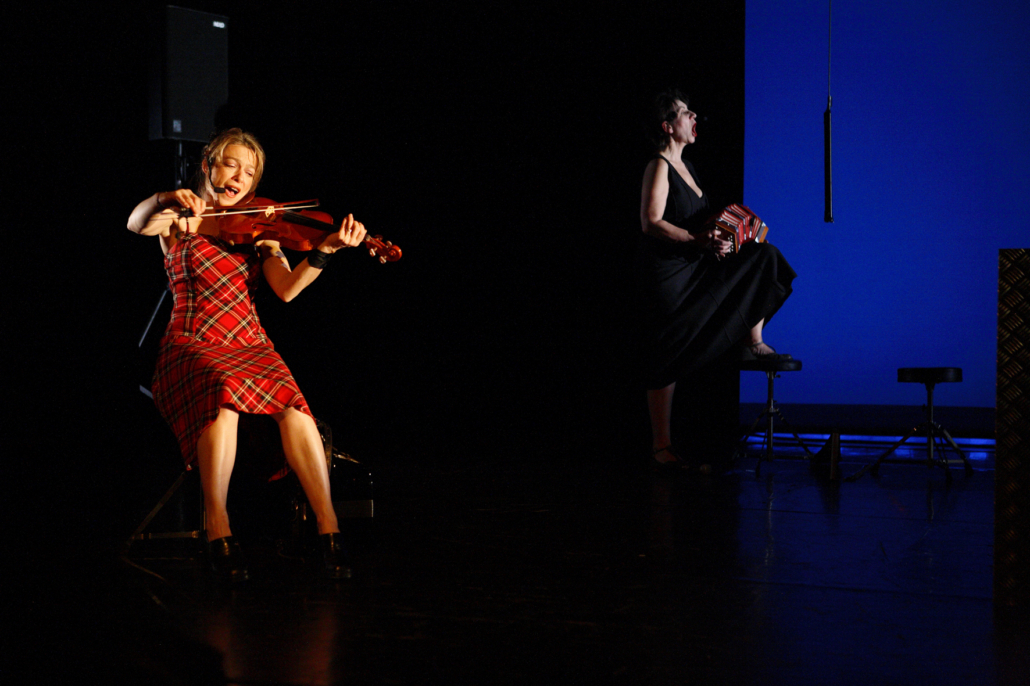
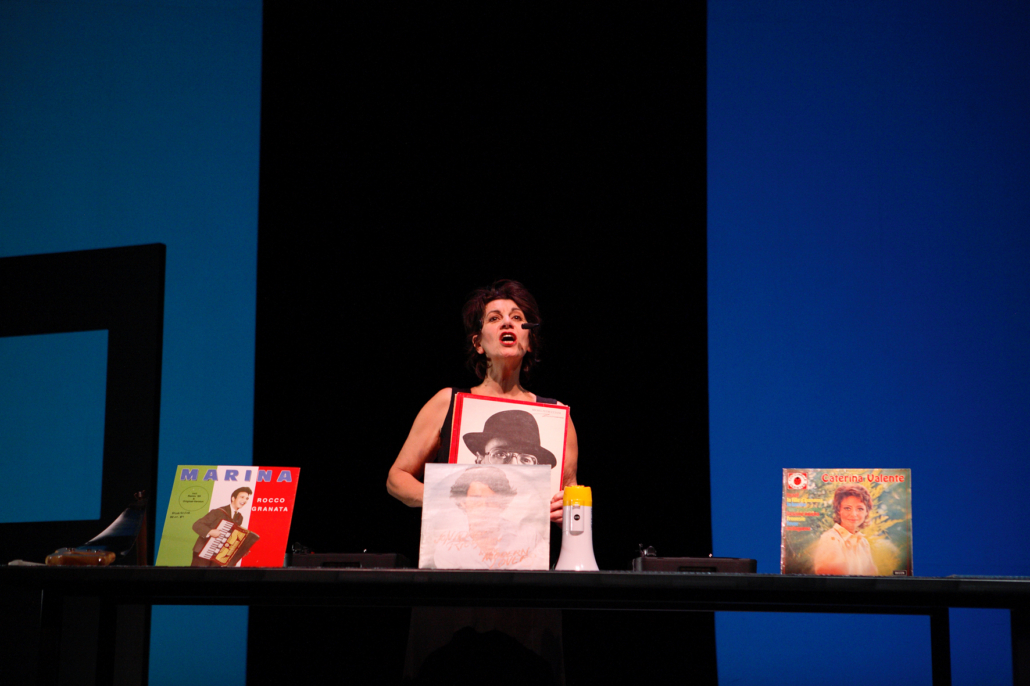
What is La Noce des Platines about? The marriage between humans and machines that play and record music. And, as with any wedding, the ceremony takes place with witnesses and in various types of “wedding venues”. Thus, La Noce des Platines evokes
– Fans dancing and singing (sometimes at the top of their lungs) in their bedrooms to their favourite records
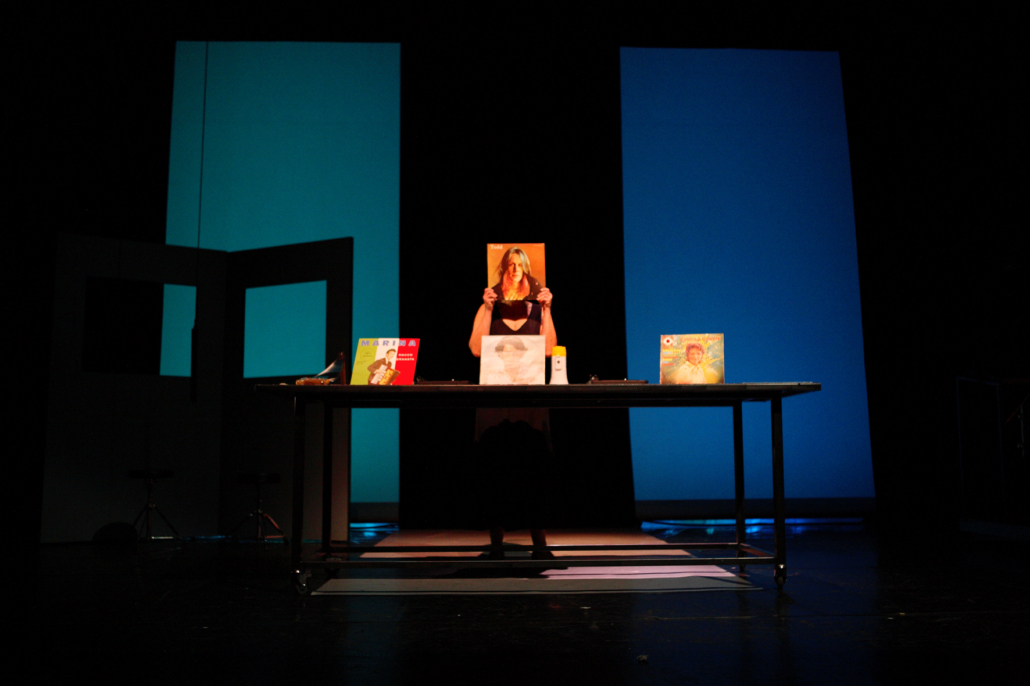
– The owner of the local record shop that delicately handling the treasures it reserves for its customers
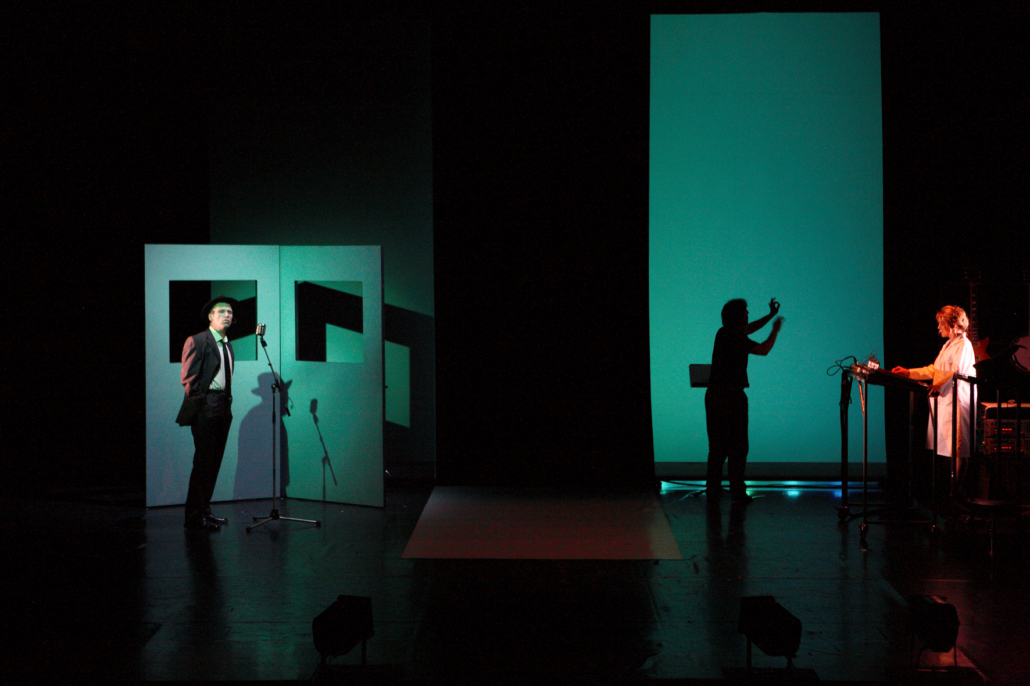
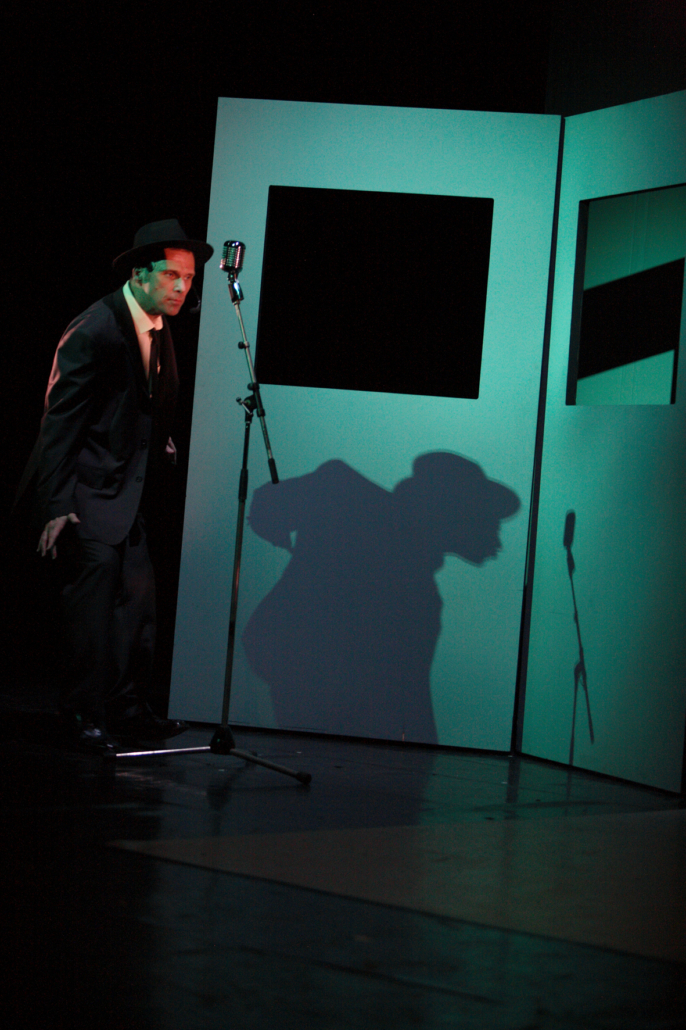
– A recording studio where a 1940s crooner sings with a brass band
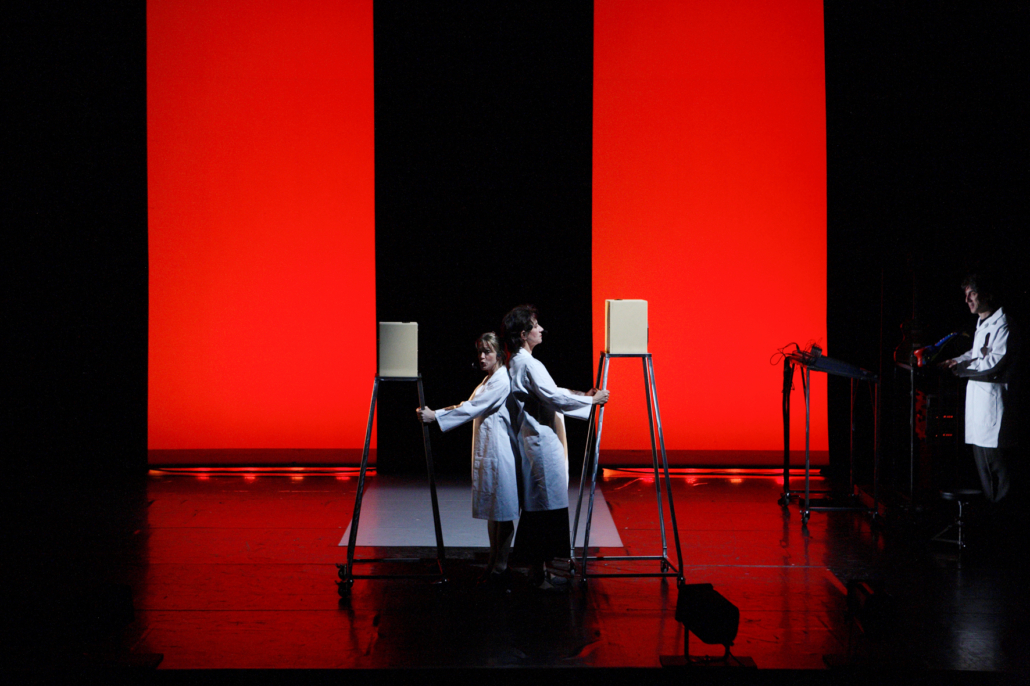
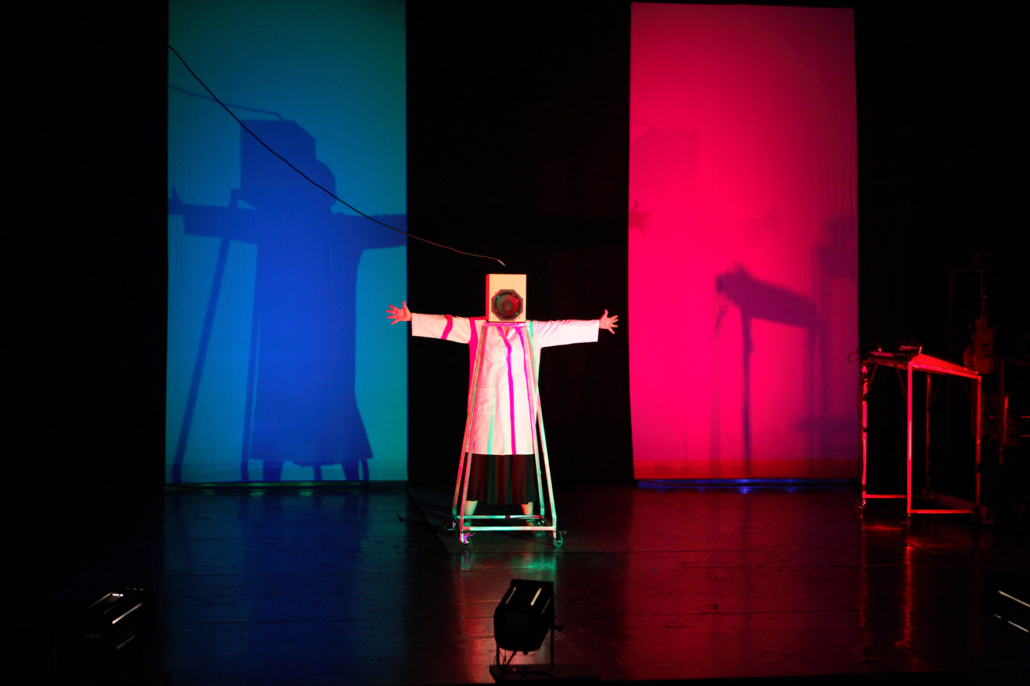
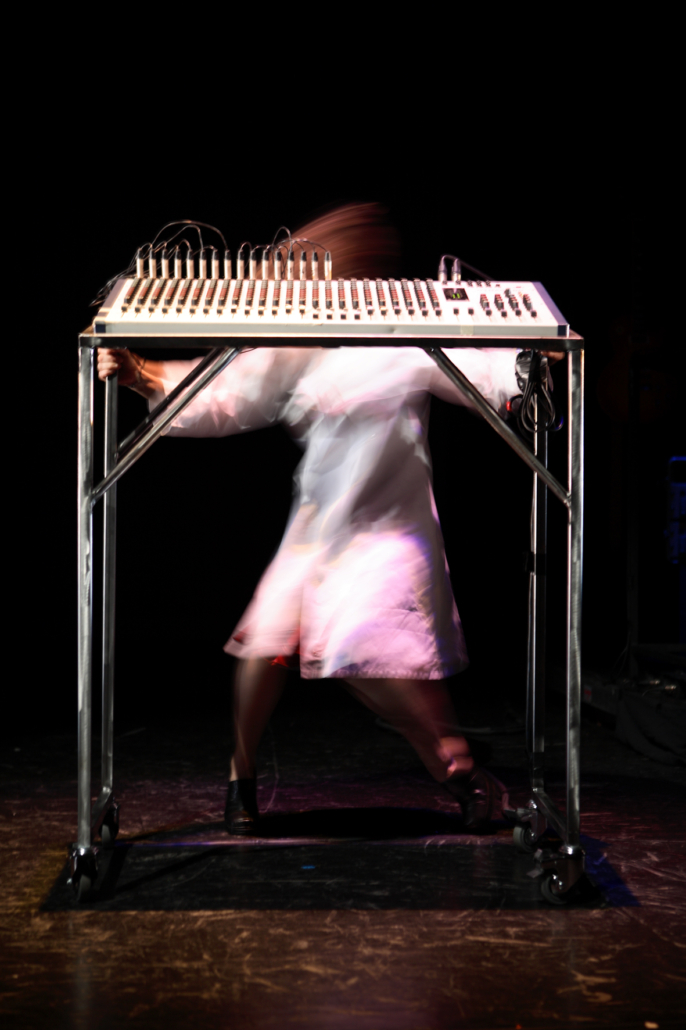
– (Highly) inventive sound artists experimenting conducting quirky experiments with loudspeakers on wheels
– A love of 1960s American pop
– A crazy mixing console
– A highly electric surgical procedure and even the writings of 17th century scientist Francis Bacon.
In short, it is a journey into the heart of the ‘black box of music’.
Presse
blog culturecom
6 February 2008
Pop opera by the Ribac/Schwabe Company
Last night, I was at La Condition Publique to listen to the “pop opera” that was programmed by La Clef des chants, which has a habit in the region of upsetting our vision of opera and lyrical art (if we have one): we’ve seen them baroque, in the atmosphere of estaminets or even in the street (soon, a street operetta directed by Sophie Cornille). Often, no doubt by virtue of this ‘decentralised’ practice as we say back home (or outside the walls: in short, far from classic stage reports), the guest productions are very theatrical, and this is perhaps one reason why I like their programming.
I must say that there was also a big word linked to this excellent “Noce des platines”: “Her-mé-neu-ti-que” orchestra. I like that word, because you can spend hours interpreting it without ever getting to the end: exciting. And the Ribac/Schwabe Company has chosen its vocabulary well, since its show likes to mix languages and instruments (Eva Schwabe even takes a musical saw very lightly and makes it vibrate like a ghost), as if opening up tracks for our ears and windows for our minds:
“We created tubes to hold onto sounds, but we could also let them fly off on the wind,” the singers conclude in an airy musical drift. And the accordions, synthesizer, and banjo seem to take flight up into the rafters…
That Noce des Platines is indescribable enough to talk about…
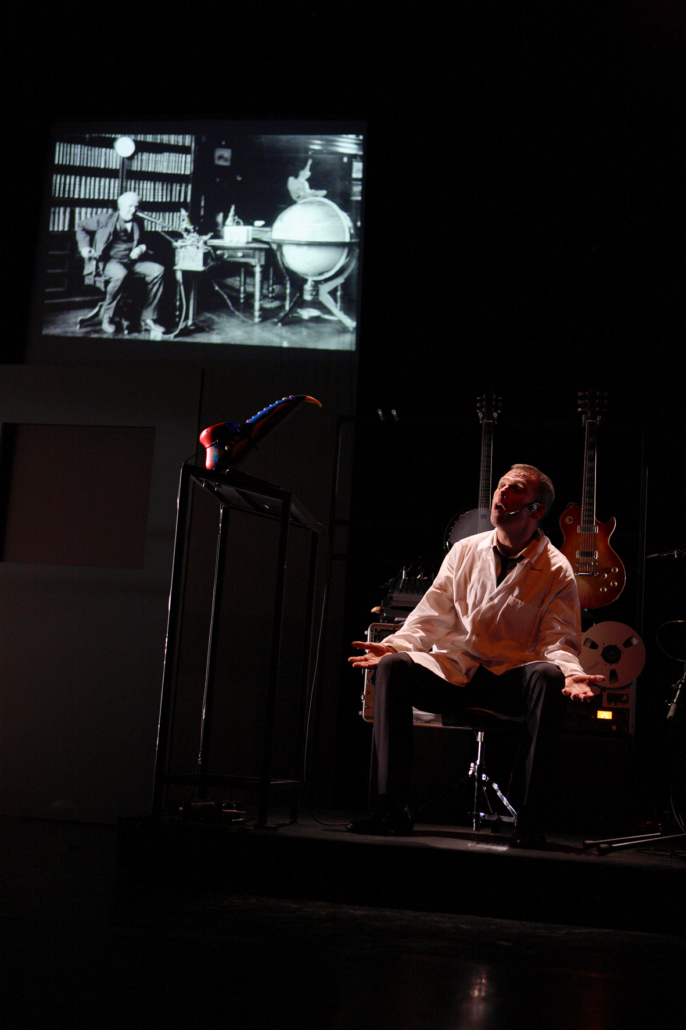
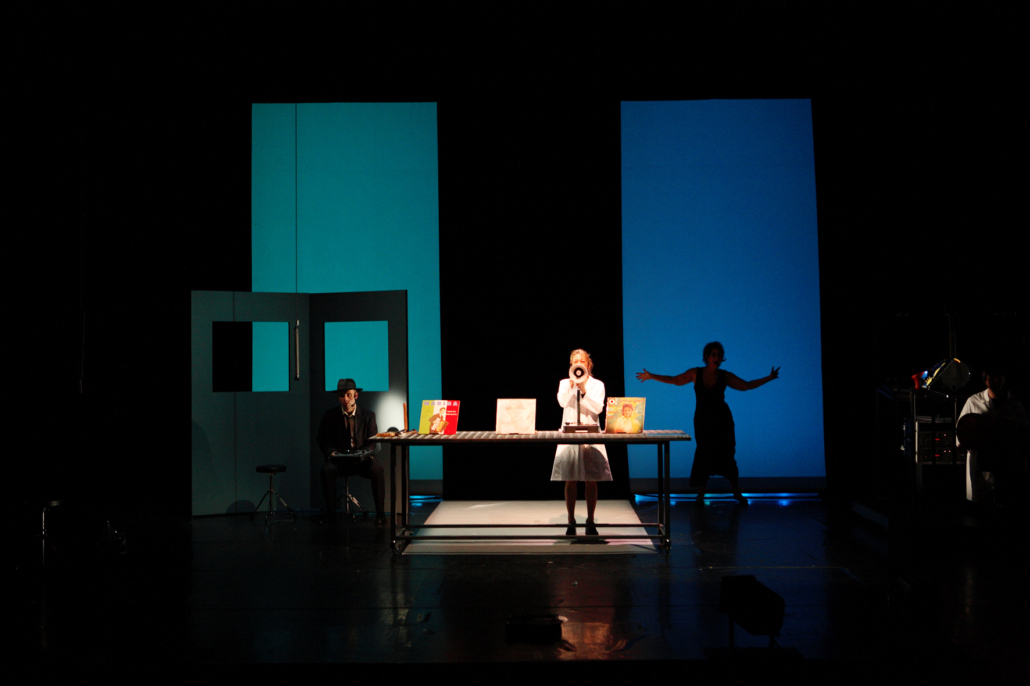
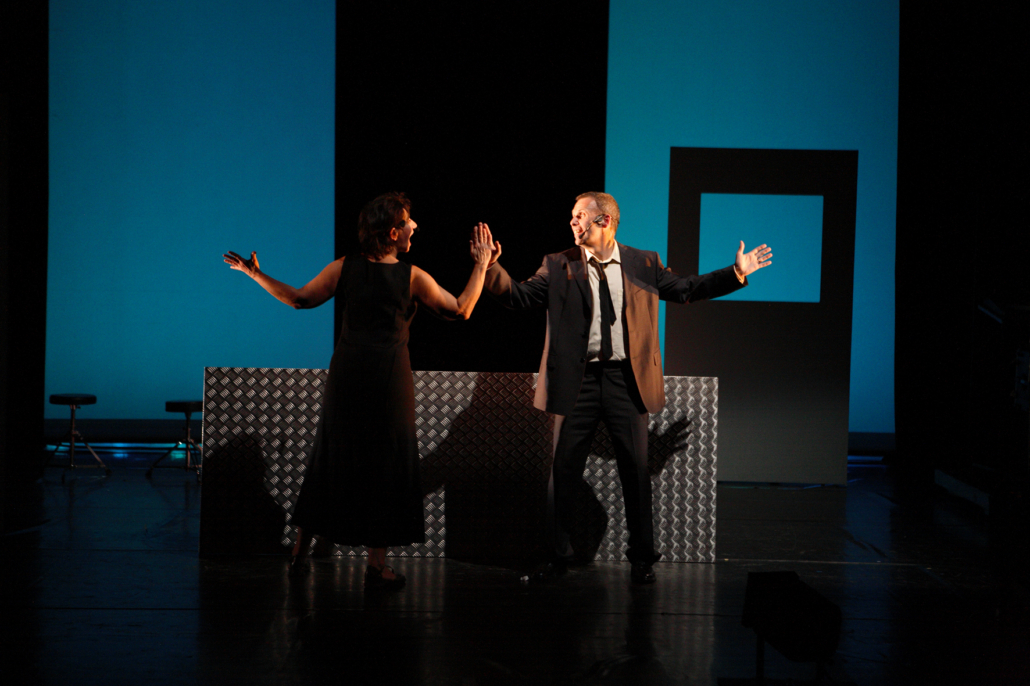
Singers dressed as 18th century scientists come to play us the lesson on scholarship, in English, in German, in French. Needless to say, in this language we can only understand the music and the derision of the four performers. For if there was a framework to give to this show, made up of several “scenes” like so many moments of experimentation with sounds, it is the humour and poetry that emerge from it. Impeccable set design, evoking a blend of laboratory, studio, vinyl shop, and late 1980s London bar, takes us back, without pretension, to the origins of the phonautograph and other sound-producing machines. Alexander Graham Bell is evoked, and his invention—the telephone—is restored to its terrifying, tragic significance: Bell’s assistant, Watson (“Can you hear me, my dear Watson?”), pays a midnight visit to the morgue to sever the head of a deceased woman, retrieve her inner ear, and replicate it using flesh, metal, and bone… A truly fantastic moment in the show!
And it all started with a tube…
Other experiments—always blending vocal and instrumental performance with machine manipulation—include a tongue-in-cheek ballet featuring an organ or even two loudspeakers (pictured above) handled by the performers in an unlikely choreography…An unforgettable solo by Cathal Coughlan and his peerless voice….A tribute to the vyniles whose crackling sound we listen to with happiness… A sound engineer who struggles with his console which suddenly refuses to obey (here, even the walls and objects break free to create their own sounds!)… Voices, organs, circuits, saws, accordions, tape recorders, dictaphones, and various cheap amps or saxophones are all pressed into service for these often hilarious sonic experiments. And then there is François Ribac’s guitar; who, during the encore, gives a nod to the masters of pop, the Beatles, with a rendition of… Doctor Robert. The aim is to create a sort of bridge between the classic exercise of “variation on a theme of” (the pop universe), which uses a fragment of another work as a pretext to build its development, and the technique of sampling and collage. “Rather than trying to reproduce techniques from techno (dijaying), hip hop (scratching with vinyl turntables) or electro-acoustics (spatialized sound diffusion), we will endeavour to elaborate (without pretension!) a specific gesture, linked to the functionalities of the objects of reproduction” write the creators in their artistic statement. Mission accomplished!
The scientific-playful argument for the experiments in this show takes us back to 1626: “an English scholar named Francis Bacon wrote a utopia entitled The New Atlantis. (full text and extracts on Gallica) In it he described laboratories where microbes were isolated, plant species were grown and sound was manipulated, amplified, echoed, stored and sent through pipes. In short, Bacon anticipated the Beatles’ recording studio,” says the pitch.
What stuck with me most about Bacon was his determination to classify objects and sciences in a rather indigestible Novum Organum: a classification to which Kant undoubtedly referred in order to produce his Copernican revolution, which no longer puts man at the centre of our experiences, but experience at the centre of our knowledge. The circle is complete: in La Noce des Platines, it is indeed a question of immersing us in sonic experiences, spinning sounds, and revealing the infinite variety of their sources and their interpretations, like the hypotheses of a world that we must first feel before letting it fade away… “fade” [ang.: to disappear, to evaporate in the air, to melt], as the refrain of this rhythmic Noce melancholically states…
Latest news
 16th march 2026 – Some news16 March 2026 - 10h00
 François Ribac 16-03-1961 – 06-11-202415 November 2024 - 11h38

